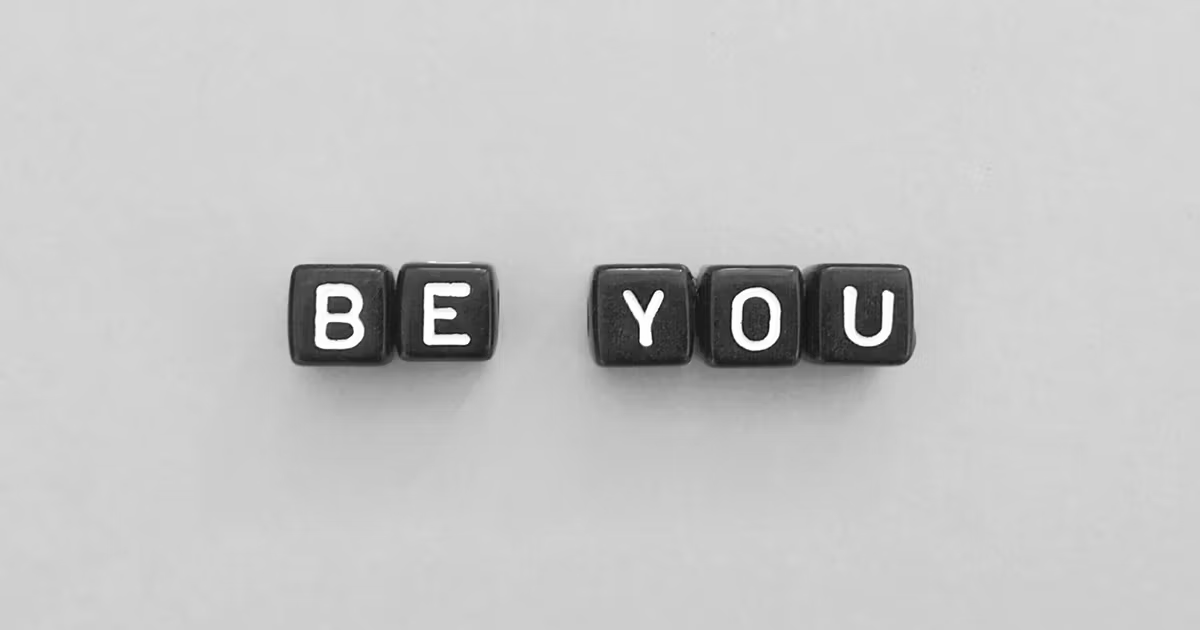
There’s a kind of happiness that doesn’t need to announce itself loudly. It’s not the excitement of achieving something big, being praised, gaining approval, or finally reaching a milestone you have been working towards for years. Those moments can be meaningful, and they deserve to be enjoyed. But the happiness I’m thinking of is quieter. It comes from feeling more at ease with yourself.
For me, this has become one of the most peaceful parts of getting older. I feel fortunate to have reached a stage in life where I feel genuinely comfortable with who I am. I no longer feel the same need to impress people, compete with them, or shape myself around what others might think. I try to live according to my values, my beliefs, and the kind of person I want to be.
That has given me a sense of peace, freedom, and lightness that would have felt difficult to imagine in my earlier years.
What It Means to Feel at Home in Yourself
Feeling at home in yourself doesn’t mean you think you are perfect. It doesn’t mean every insecurity disappears, every old wound closes, or every day feels calm and confident.
It means you can sit with yourself without always feeling the need to fix, prove, defend, or explain who you are. You know your strengths, but you’re not pretending your weaknesses don’t exist. You can see where you would still like to grow, but you no longer treat your imperfections as evidence that you’re not enough.
This kind of self-acceptance matters because the way we relate to ourselves can shape the way we move through life. Harvard Health explains that greater self-acceptance can improve emotional wellbeing, especially because it changes how we see our strengths, limitations, and imperfections.
When you feel more at home in yourself, life can feel less like a performance. You’re less likely to scan the room for approval, try to win every conversation, prove your worth through productivity, or become someone more impressive simply to feel acceptable.
You begin to realise that feeling secure in who you are isn’t selfish. It gives you a stronger foundation from which to live.
When Living for Approval Becomes Tiring
In earlier parts of life, it can be easy to measure yourself through other people’s reactions.
Did they like me? Did I sound smart enough? Did I say the right thing? Do I look successful? Do people respect me? Am I where I should be by now?
These questions can become tiring because they place your sense of self in someone else’s hands. An opinion can begin to feel like a verdict. A comparison can feel threatening. Even silence may become something you feel the need to analyse.
I understand this because I have lived parts of my life with that inner noise. I know what it feels like to want to be seen in a certain way, to care too much about how others perceive you, and to quietly compare your progress with someone else’s.
If your happiness relies heavily on being validated by others, your sense of peace can begin to feel fragile.
Approval can be comforting, but it rarely offers a reliable foundation. People have different values, moods, expectations, insecurities, and opinions. Some will understand you. Some may misunderstand you. Some will admire what you do. Others may barely notice.
Self-Acceptance Doesn’t Mean Giving Up
One misunderstanding about self-acceptance is that it can sound passive, as though accepting yourself means you stop trying to improve.
I see it differently. Self-acceptance isn’t the opposite of growth. It can be what makes healthy growth possible. When you’re not repeatedly criticising yourself, you have more energy to learn, adjust, and make better choices.
That distinction matters. There is a meaningful difference between saying, “I’m flawed, so I’m hopeless,” and saying, “I’m human, so I can keep learning.” The first can keep you trapped in shame. The second gives you room to grow without turning growth into punishment.
Feeling at home in yourself means you can want to become wiser, kinder, healthier, or more courageous without treating your current self as the enemy.
Living More from Values Than Comparison
One of the biggest shifts for me has been learning to live more from my values than from comparison.
Comparison asks, “Am I ahead or behind?” Values ask, “Am I living in a way I respect?” Comparison can leave us feeling restless. Values can give us direction.
When I think about the life I want to live, I keep coming back to things like family, integrity, growth, kindness, responsibility, purpose, and making good use of the time I have. These values don’t make life simple, but they help me feel clearer about the kind of person I want to be.
This is why values matter. When you become clearer about what matters to you, it becomes easier to make choices that feel honest from the inside. Psychology Today notes that living in alignment with our values can support fulfilment, resilience, and wellbeing, which may be more sustaining than pursuing approval that can continually shift.
That clarity can bring a deeper kind of happiness because it reduces the need to compete with every other version of success.
Someone else may want a louder life. Someone else may pursue a different kind of recognition. Someone else may measure success in ways that don’t feel right for you. That’s okay.
When you know what matters to you, you don’t need to turn every difference into a judgement. You can respect someone else’s path without losing sight of your own.
The Relief of Feeling Less Need to Perform
There’s a lightness that can come when you feel less pressure to be impressive. You can speak more honestly, make choices with less fear, admit what you don’t know, and enjoy simple things without worrying whether they look exciting enough from the outside.
You may also become less reactive. When someone criticises you, it may still sting, but it doesn’t have to define you. When someone succeeds, you can appreciate their progress without seeing it as evidence of your own failure. When someone misunderstands your choices, you can pause before feeling the need to defend your whole life.
That doesn’t mean you become careless about other people. It means you become more thoughtful about which opinions you allow to shape your sense of worth.
I think many people recognise this from their own experience. The more accepting you become of yourself, the less energy you may spend questioning whether you deserve to be who you are.
Gentle Ways to Feel More at Home in Yourself
Feeling more at home in yourself doesn’t usually come from one dramatic breakthrough. It’s more likely to develop through small, honest choices.
You might begin by noticing where you’re seeking acceptance rather than being honest. Where do you feel most tempted to exaggerate, hide, please, compete, or apologise for who you are?
You might ask yourself which values you want to live by when no one is watching. Not the values that sound impressive, but the ones you genuinely want guiding your decisions.
You might practise speaking to yourself with more fairness. This doesn’t require false praise or empty positivity, but a more balanced inner voice that can recognise your effort, your humanity, and your capacity to keep growing.
The American Psychiatric Association explains that self-compassion can help improve psychological wellbeing, which is a useful reminder that the way you speak to yourself matters. A kinder inner voice can make growth feel less like self-punishment and more like self-respect.
You might also become more selective about whose opinions you allow to influence you. Not every opinion deserves the same weight. The people who know you well, respect your values, and genuinely want the best for you are usually worth listening to more deeply than those who see only a small part of your life.
Most of all, you can begin treating your own life as something you are allowed to inhabit fully.
Not once you are more successful.
Not once everyone understands you.
Not once you become some polished, fearless version of yourself.
Now.
A Lighter Way of Living
The happiness that comes from feeling more at home in yourself isn’t loud or showy. It’s a quieter form of freedom.
It’s being able to look at your life and feel that, while everything may not be perfect, you are no longer living as a stranger to yourself. You know more clearly what matters. You’re less guided by comparison. You can keep growing without continually rejecting who you are.
I still have things to learn. I still have moments when old insecurities show up. I still have days when I need to remind myself of what matters.
But I no longer feel the same pressure to prove my worth to the world.
To me, that’s a beautiful kind of happiness.
Not because life becomes easy, but because you learn to remain on your own side as you move through it.
First published: 15 June 2026
Last updated: 20 July 2026


