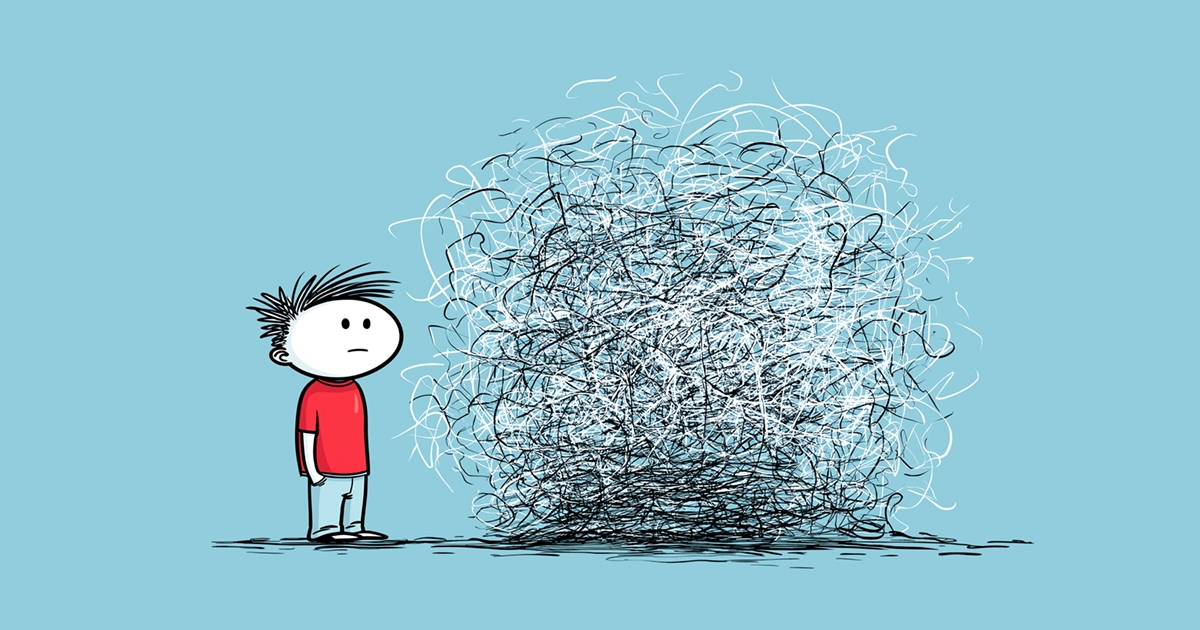
Mental clutter can make everyday life feel heavier than it really is.
It’s not always the size of our responsibilities that wears us down. Sometimes it’s the number of unfinished thoughts we carry: a message we still need to answer, a decision we keep postponing, a loose end at work, a household task we have walked past three times, or a conversation we know we need to have but keep mentally rehearsing.
None of these things may be urgent on their own. But when they collect in the background of our mind, life can start to feel more crowded, tense, and difficult than the moment actually requires.
I have noticed this in myself many times. I don’t like mental clutter. I can function with it, but I rarely feel at ease with it.
One example is heading into the weekend with loose ends I know I will need to sort out on Monday. Even if I don’t need to act on them straight away, just knowing they are there can stop me from fully relaxing. My body may be away from work, but part of my mind is still keeping the task alive.
Maybe that isn’t how everyone experiences it. But it’s certainly how it feels for me.
The Weight of What Is Unfinished
Mental clutter isn’t always dramatic. Often, it’s quiet.
It can sound like:
- I need to remember that.
- I should deal with this later.
- I can’t forget to reply.
- I need to make a decision about that.
- I will sort it out when I have more time.
The problem is that our mind isn’t designed to be an endless storage cupboard for unresolved tasks, worries, and reminders. Research indicates that working memory holds only a small amount of information in a readily accessible form, which helps explain why too many open loops can begin to compete for attention. Even when we are trying to rest, they can keep nudging us from the background.
This is one reason unfinished work can feel so mentally sticky. Research on rumination points to the way repeated thinking can keep the stress response active for longer than the original problem itself. The American Psychological Association suggests that rumination and recall can prolong a person’s physiological stress response, which helps explain why something small can feel bigger when our mind keeps returning to it.
That doesn’t mean every unfinished task is harmful. Life will always contain things that are incomplete. But there’s a difference between a task being calmly parked and a task being mentally carried. A parked task has a place. A carried task keeps following you.
Why Small Loose Ends Can Feel So Draining
One of the sneakiest things about mental clutter is that it doesn’t always look like stress from the outside. You might still be answering emails, caring for your family, finishing errands, doing your work, and keeping up with life. But inside, there may be a constant feeling of unfinishedness.
It’s like having too many browser tabs open in your mind. None of them may seem like much on their own, but together they slow everything down.
This can make simple decisions feel harder. It can make rest feel less satisfying. It can make ordinary responsibilities feel heavier because we aren’t only doing what’s in front of us. We are also carrying everything we haven’t yet processed.
That’s when mental clutter begins to distort reality. Life may not actually be falling apart, but the mind can feel crowded enough that everything seems harder to hold. This is why clearing mental clutter isn’t just about being organised. It’s about protecting your peace.
The Relief of Creating Closure
For me, one of the most helpful ways to reduce mental clutter is to create closure wherever I reasonably can.
If I can finish a task on Friday instead of leaving it to sit in my mind all weekend, I will often do it. Sometimes I will even do it early on the weekend, not because it’s urgent, but because I know the relief will be worth it. Then I would typically schedule an email for Monday to confirm that it’s done.
That small action gives me peace.
I approach late-day requests in a similar way. If something arrives near the end of the day and I know it will stay on my mind overnight, I may choose to get it done, even if that means working a little later. Then I schedule the confirmation email for the next day.
I do this for two reasons. First, I value not carrying unnecessary mental weight overnight or through the weekend. Second, I also want to avoid sending work emails to others outside regular hours. Scheduling the email lets the work be completed without passing the mental clutter on to someone else during their personal time.
This isn’t a perfect system, and it won’t suit everyone. There are times when finishing something late isn’t the healthiest choice. There are also times when rest matters more than closure. But for me, there’s often a real sense of calm that comes from tying off a loose end before it has the chance to follow me around.
The deeper point isn’t that everyone should work late or clear every task immediately. The point is to understand your own mind well enough to know what helps you feel clear, calm, and present.
Mental Clutter Isn’t Always About Having Too Much to Do
Mental clutter is often mistaken for busyness, but they aren’t the same thing.
You can have a full day and still feel mentally clear if your priorities are understood, your next steps are obvious, and your responsibilities have a place to live outside your head. You can also have a quiet day and feel overwhelmed if your mind is full of unresolved thoughts.
I believe mental clutter often comes from ambiguity. It grows when we haven’t decided what something means, when it needs to be done, what the next step is, or whether it matters at all.
A vague task is more mentally expensive than a clear one.
“Sort that out sometime” is harder to carry than “Email Sam on Monday at 10am.”
“Think about the budget” is heavier than “Review expenses for 20 minutes on Thursday.”
“Deal with that issue” is more stressful than “Write down the problem and work on the next step.”
Clarity doesn’t remove every responsibility, but it often reduces the emotional weight of carrying it.
The Connection Between Rest and Mental Space
Rest isn’t only about stopping activity. It’s also about giving the mind permission to stop scanning for unfinished business.
That’s why a weekend can technically be free but still not feel restorative. If the mind keeps replaying work, decisions, worries, and obligations, the body may be resting while the brain remains on duty.
The Mental Health Foundation UK highlights how worrying in bed can make falling asleep harder, especially before an important day. That feels very familiar to me. The mind often becomes loudest when the world becomes quiet.
This is why it can help to build small rituals of closure into daily life. You might write tomorrow’s top priorities before finishing work, reply to one lingering message, move a task into your calendar, or decide that something can wait and name exactly when you will return to it.
The aim isn’t to empty your life of responsibility. The aim is to stop your responsibilities from floating around your mind without a home.
Simple Ways to Clear Mental Clutter
Clearing mental clutter doesn’t need to become another complicated self-improvement project. In fact, the simpler the system, the more likely it is to help.
A good place to begin is with a quick mental download. Write down everything that’s taking up space in your mind, without trying to organise it at first: tasks, worries, decisions, reminders, appointments, ideas, and unfinished conversations. Get them out of your head and onto a page.
Then sort them into a few practical groups:
- What needs action?
- What needs a decision?
- What needs to be scheduled?
- What can be let go?
- What isn’t actually yours to carry?
That last question matters. Some mental clutter comes from responsibility. Some comes from over-responsibility. We can end up carrying other people’s expectations, moods, assumptions, and urgency as if they belong to us.
Another useful habit is choosing the next smallest step. Mental clutter often grows because we keep thinking about the whole problem instead of identifying the next move. The mind feels calmer when it knows what comes next.
You can also create a simple end-of-day reset. Before you stop work or wind down for the evening, take five minutes to capture loose ends, decide what genuinely needs attention, and park the rest somewhere reliable.
Healthdirect Australia explains how slow breathing, mindfulness, exercise and sleep can help relieve stress. These practices matter, but they often work better when paired with practical clarity. A breathing exercise may calm your body, but writing down the thing you are afraid of forgetting may calm the part of your mind still trying to stay in control.
When Clearing Clutter Becomes Avoidance
There’s an important balance here.
Clearing mental clutter can be healthy. It can bring relief, improve focus, and help us be more present. But it can also become a way of avoiding discomfort if we start believing everything must be finished before we are allowed to rest.
That is a trap I have to be mindful of myself.
There are times when finishing the task is the kindest option. There are also times when the kindest option is accepting that life will remain a little unfinished while you sleep, spend time with family, or simply let your mind recover.
Peace isn’t always found in getting everything done. Sometimes it’s found in trusting that something has been captured, scheduled, or consciously set aside.
The goal isn’t perfection. It’s a healthier relationship with what’s unfinished. Mental clarity isn’t about controlling every detail. It’s about knowing what deserves your attention now, what can wait, and what you can stop carrying altogether.
A Lighter Way to Move Through Everyday Life
Life will always come with loose ends. There will always be unanswered messages, unfinished tasks, open decisions, and responsibilities waiting for us. But we don’t have to carry all of them in the same way.
Some things need action. Some need a plan. Some need patience. Some need to be released. When we learn the difference, life often begins to feel lighter.
For me, reducing mental clutter is one of the simple ways I protect my peace. It helps me enter the weekend with more space in my mind. It helps me sleep with fewer loose threads pulling at my attention. It helps me give more of myself to the people and moments in front of me.
Maybe mental clutter affects you differently. But if life has been feeling heavier than it should, it may be worth asking a simple question:
Is everything really harder right now, or is my mind carrying too many unfinished things at once?
Sometimes the answer isn’t to push harder. It’s to clear the space around what already matters.


