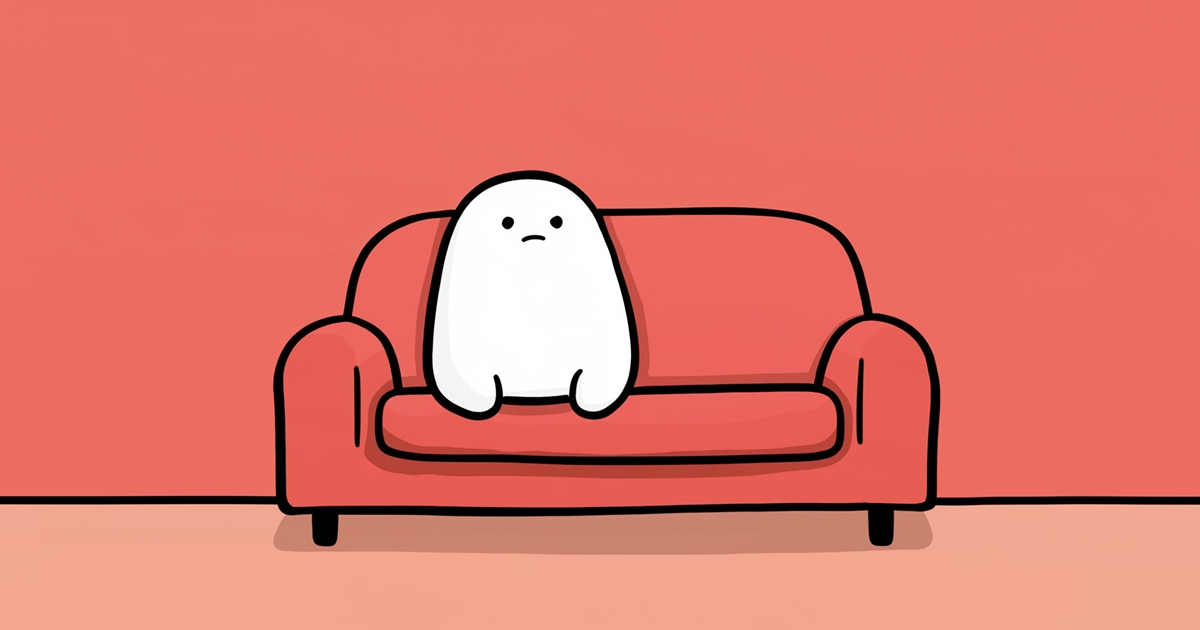
Comfort has an important place in a healthy life. We all need people, routines, spaces, and rhythms that help us feel grounded. Without some sense of comfort, life would quickly become exhausting.
Comfort becomes limiting when it starts making too many of our decisions for us.
When every decision is shaped by what feels safest, easiest, or least confronting, life can quietly shrink. We may avoid the hard conversation, stay in the familiar role, delay the meaningful change, ignore the dream that keeps returning, or convince ourselves that “now isn’t the right time” for something we deeply care about.
I’ve come to believe that this is one of the hidden risks of personal growth. Being too comfortable can hold you back from living fully. Not because comfort itself is wrong, but because too much of it can quietly limit your potential.
I recently came across a quote that resonated with me. It suggested that the riskiest thing most people do isn’t one bold decision, but the slow accumulation of safe ones. Every year we choose the safer option, the gap between the life we are living and the potential we have yet to explore grows wider. The leap required to close it becomes larger.
That idea struck me because it feels true. Safety can compound too, but in the wrong direction.
Comfort Can Be a Quiet Form of Avoidance
Most of us don’t avoid growth because we are lazy or careless. We avoid it because growth often asks something from us before it gives something back.
It asks for uncertainty. It asks for effort. It asks for humility. It asks us to become beginners again, risk disappointment, face feedback, and step into situations where we may not feel completely in control.
Comfort, on the other hand, offers immediate relief. It says, “Stay here. You know this place. You can manage this.”
That can feel sensible in the moment. Sometimes it is sensible. Rest, stability, and emotional safety matter. The issue is when comfort becomes a permanent hiding place rather than a place to recover.
Guidance from the UK’s NHS on learning new skills for mental wellbeing notes that learning can help boost self-confidence, build purpose, and create connection. That matters because growth often begins with doing something unfamiliar, even in small ways.
When we stop learning, stretching, and trying, we may feel safe for a while. Eventually, though, that safety can become a different kind of discomfort. The discomfort of feeling stuck.
The Risk of Staying the Same
Choosing comfort often feels harmless because nothing dramatic happens at first.
You stay in the routine. You keep the same habits. You avoid the difficult decision. You delay the change for another month. Life continues.
The risk is that the cost is often invisible until much later.
A person may not notice the effect of avoiding challenges for one week. They may not notice it after one month. But after years of repeatedly choosing the easiest path, they may look around and realise they have built a life around avoiding discomfort rather than moving towards meaning.
That’s when comfort becomes risky.
Not risky in a dramatic sense, but in a quiet one. The risk of unused ability. The risk of becoming too familiar with less than you are capable of. The risk of adjusting your dreams down until they no longer ask anything of you.
This is something I’ve had to reflect on in my own life. In my journey of personal growth, I’ve learned that living fully often requires moving towards the things that feel meaningful, not only the things that feel manageable.
That doesn’t mean chasing constant achievement. It means being honest enough to ask, “Am I choosing this because it aligns with my values, or because it protects me from discomfort?”
Growth Usually Starts Before Confidence Arrives
One of the reasons people choose comfort is because they are waiting to feel ready.
Ready to start. Ready to speak. Ready to apply. Ready to change. Ready to become the kind of person who can handle the next step.
The difficult truth is that confidence often arrives after action, not before it.
In its podcast episode on growth mindset, the American Psychological Association explains the concept as the belief that abilities can be developed through effort, learning strategies, and support. This is important because it challenges the idea that we need to feel naturally capable before we begin.
Many meaningful changes start awkwardly. The first attempt may be clumsy. The first conversation may feel uncomfortable. The first step may be small. That doesn’t mean it’s wrong. It may simply mean you are entering new territory.
Growth often asks us to tolerate the gap between who we are now and who we are becoming.
That gap can feel uncomfortable, but it’s also where progress happens.
Safe Choices Can Still Carry a Cost
It’s easy to think of risk only as doing something bold.
Leaving a job. Starting a business. Having a difficult conversation. Moving somewhere new. Sharing your work publicly. Changing direction. Setting a boundary.
Those things can carry risk, of course. But staying exactly where you are can carry risk too.
There’s the risk of resentment. The risk of regret. The risk of drifting. The risk of becoming disconnected from your own values. The risk of waking up one day and realising you kept choosing what was familiar, even when it was no longer fulfilling.
This isn’t about making reckless decisions. Growth doesn’t require you to abandon responsibility or ignore real-world consequences. A wiser approach is to take thoughtful risks, the kind that stretch you without breaking you.
For some people, that may mean taking a course. For others, it may mean asking for help, applying for a role, repairing a relationship, changing an unhealthy pattern, or finally giving attention to a dream they have kept postponing.
The point isn’t to make your life more dramatic. The point is to stop mistaking comfort for fulfilment.
The Growth Zone Isn’t the Panic Zone
There’s a difference between healthy discomfort and overwhelm.
Healthy discomfort stretches you. It asks you to learn, practise, reflect, and adapt. It may feel challenging, but it still leaves room for thought, support, and choice.
Overwhelm shuts you down. It pushes you too far too quickly. It can make growth feel threatening rather than possible.
This distinction matters because stepping outside your comfort zone doesn’t mean forcing yourself into constant pressure. It means expanding your capacity gradually.
A helpful way to think about this is to choose challenges that are meaningful but manageable. The PositivePsychology.com overview of the comfort zone and growth zone describes growth as something that often happens beyond the familiar, while also recognising that too much stress can become counterproductive.
You don’t need to transform your whole life at once. In fact, most lasting growth begins with smaller acts of courage repeated with intention.
Here are a few places to begin:
- Have one honest conversation you have been avoiding
- Try one new habit for a month
- Learn a skill that supports the person you want to become
- Ask for feedback instead of avoiding it
- Say yes to an opportunity that feels meaningful but uncomfortable
- Say no to something that keeps you stuck
Small risks can create large shifts when they are aligned with your values.
Ask What Comfort Is Protecting You From
A useful question to ask isn’t just, “What do I want?”
It’s also, “What is my comfort protecting me from?”
Sometimes comfort protects us from failure. Sometimes it protects us from judgement. Sometimes it protects us from uncertainty, rejection, responsibility, or the possibility that we may need to change how we see ourselves.
That question can be confronting, but it can also be freeing.
When you understand what you are avoiding, you gain more choice. You can stop treating discomfort as a warning sign and start seeing it as information.
For example, nervousness before a new challenge may not mean you should stop. It may mean the challenge matters to you. Fear before an honest conversation may not mean the conversation is wrong. It may mean you care about the outcome.
Not every uncomfortable path is worth taking. But some of the most important ones are.
Choose a Life That Keeps Expanding
The aim isn’t to reject comfort completely. Comfort has its place. We need rest, familiarity, safe relationships, and routines that help us recover.
The deeper question is whether comfort is supporting your growth or replacing it.
A good life needs both safety and stretch. Safety gives you somewhere to stand. Stretch gives you somewhere to grow.
When you keep choosing only what feels easy, your world can slowly become smaller. When you choose meaningful discomfort in thoughtful ways, your world can begin to open again.
You don’t need to make a dramatic leap today. You only need to notice where comfort has become a cage rather than a refuge.
Then take one honest step.
That step may feel small from the outside, but inside your life, it could be the beginning of a wider, braver chapter.


