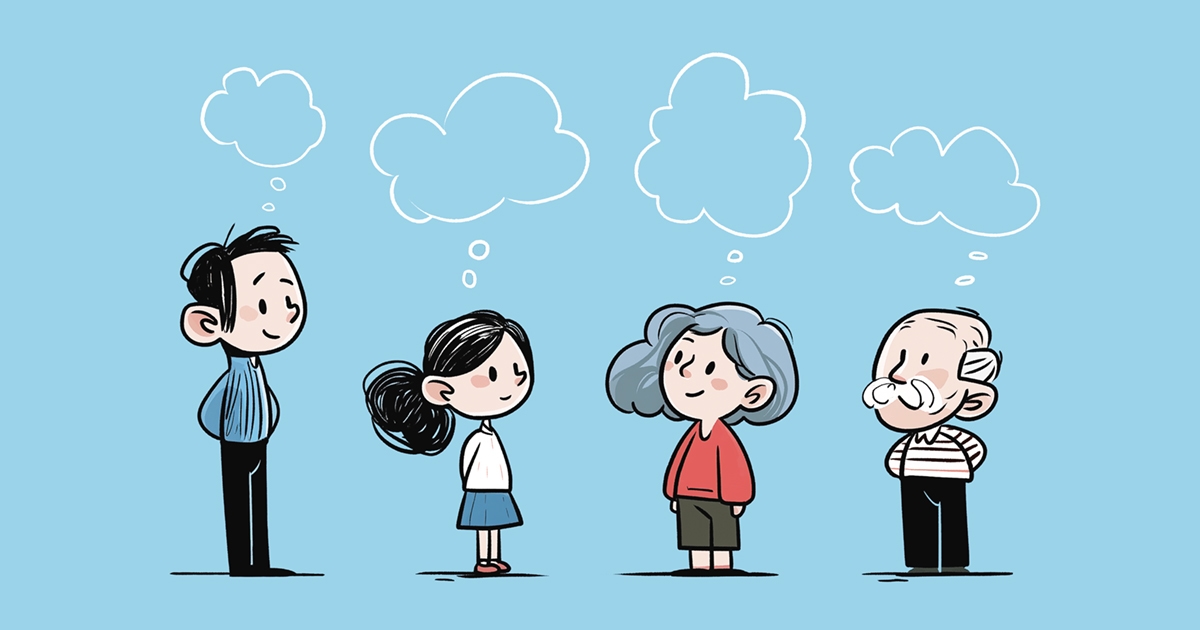
Experience can give us knowledge, confidence and better judgement. It can also tempt us to believe there is little left to reconsider. We may become quicker to explain, defend or dismiss, especially when a new idea challenges a long-held belief.
Staying teachable helps us use experience without becoming confined by it. It means carrying what experience has taught us while remaining willing to ask questions, listen carefully and revise our understanding when there is good reason. We don’t have to doubt everything we know. We simply leave enough room for life and other people to teach us something more.
Learning Extends Beyond Formal Education
Lifelong learning can include qualifications, courses and new professional skills, but it also happens in less formal ways. A conversation may challenge an assumption. A mistake may reveal a gap in our judgement. Someone with a different background may help us see a familiar situation from an angle we had never considered.
The benefits extend beyond knowledge. A University of Cambridge overview of lifelong learning reports that the European BeLL study found that between 70 and 87 percent of adult learners felt more motivated, confident and connected after returning to study. Although formal study is only one form, the findings suggest that learning can shape how capable and engaged we feel.
For me, developing your intelligence isn’t about collecting facts or appearing knowledgeable. It is about strengthening our ability to understand people, examine information and respond thoughtfully. Remaining teachable supports these abilities because it keeps curiosity active when certainty wants to take over.
When Experience Narrows Our View
Experience helps us recognise patterns, avoid familiar mistakes and make decisions without beginning from nothing each time. The difficulty arises when “I have seen this before” quietly becomes “I already understand everything that matters here”.
A changing workplace, a family disagreement or a conversation across generations may contain familiar elements without being identical to what we have faced before. What worked ten years ago may need adjusting. Expertise can guide us, but it shouldn’t prevent us from looking again.
Useful insight isn’t limited by age, status or qualifications. An older person may offer perspective shaped by decades of living. A younger person may understand shifts in culture or technology, or pressures that are less familiar to us. Someone doesn’t need to be right about everything to show us something worth considering.
Learning to Listen Before Deciding
I have understood the idea of lifelong learning for a long time, but only in the past few years has it become a more intentional and conscious practice. This shift has changed how I read, study and listen.
There were times when I listened while preparing my response. I heard the words, but part of my attention had already moved towards explaining my position or deciding why I disagreed. I don’t think this always came from a lack of care. At times it came from confidence in my reasoning. At others, responding quickly felt safer than allowing an unfamiliar perspective to unsettle me.
I now try to listen to understand before responding. When I encounter new information in the news, on the radio, through a podcast or video, or directly from another person, I pause before forming an opinion. I ask what is being said, what experience or concern may sit behind it and whether I am reacting to the idea or the discomfort it creates in me. When someone is speaking, I try to understand the perspective surrounding the idea, not only the words themselves.
A peer-reviewed review of research on listening and attitude change suggests that receiving high-quality listening can increase psychological safety and open-minded reflection, helping speakers consider perspectives they might otherwise overlook. Creating that space doesn’t require agreement. It asks us to understand what someone means before deciding what we think.
Confidence Doesn’t Require Certainty
Changing our mind can feel like admitting that we were foolish or weak. It is more helpful to separate our worth from the accuracy of any single opinion. We can make the best judgement available to us and revise it when stronger evidence or deeper understanding emerges.
Research into the dimensions of intellectual humility identifies open-mindedness, intellectual modesty, a willingness to be corrected and active engagement as four core elements. These qualities don’t require us to surrender our judgement. They allow confidence and openness to exist together.
We can say, “This is what I currently believe,” while leaving room for, “There may be something I haven’t understood.” That small shift reduces the pressure to defend every position and makes it easier to approach disagreement with curiosity rather than treating it as a contest.
Practising Teachability in Everyday Life
Remaining open to learning doesn’t need to become another demanding self-improvement project. A few deliberate habits can make it part of ordinary life:
- Ask one more question. Before giving your opinion, invite the other person to explain what led them there.
- Notice premature certainty. Phrases such as “I already know” or “People like that always” may signal that an assumption has replaced closer attention.
- Look for the useful part. Even when you reject the conclusion, a question, observation or perspective within it may be worth considering.
- Decide what could change your mind. Consider what evidence or experience would genuinely lead you to revise your position. If the honest answer is “nothing”, your openness to learning may have narrowed.
- Welcome thoughtful feedback. Finding value in constructive criticism becomes easier when feedback is treated as information to examine rather than a verdict on who you are.
These practices don’t ask us to accept unreliable claims, abandon our values or give every opinion equal weight. Staying teachable includes thinking critically, checking credible evidence and giving appropriate weight to our own knowledge and experience. Openness without judgement can leave us easily influenced, while judgement without openness can leave us unable to grow.
Leaving Room for What Life Can Teach Us
I expect some of my current beliefs will change as I gain experience, hear different stories and understand more. That thought no longer feels like a threat to the person I am. It feels like permission to continue becoming more thoughtful.
Every stage of life gives us knowledge, but it can also reveal the limits of what we know. Staying teachable allows experience to deepen us without hardening us. We can hold our views with care, listen before reaching a conclusion and remain open to learning from people we might once have overlooked. Sometimes the growth we need begins with the quiet possibility that there is more to understand.


