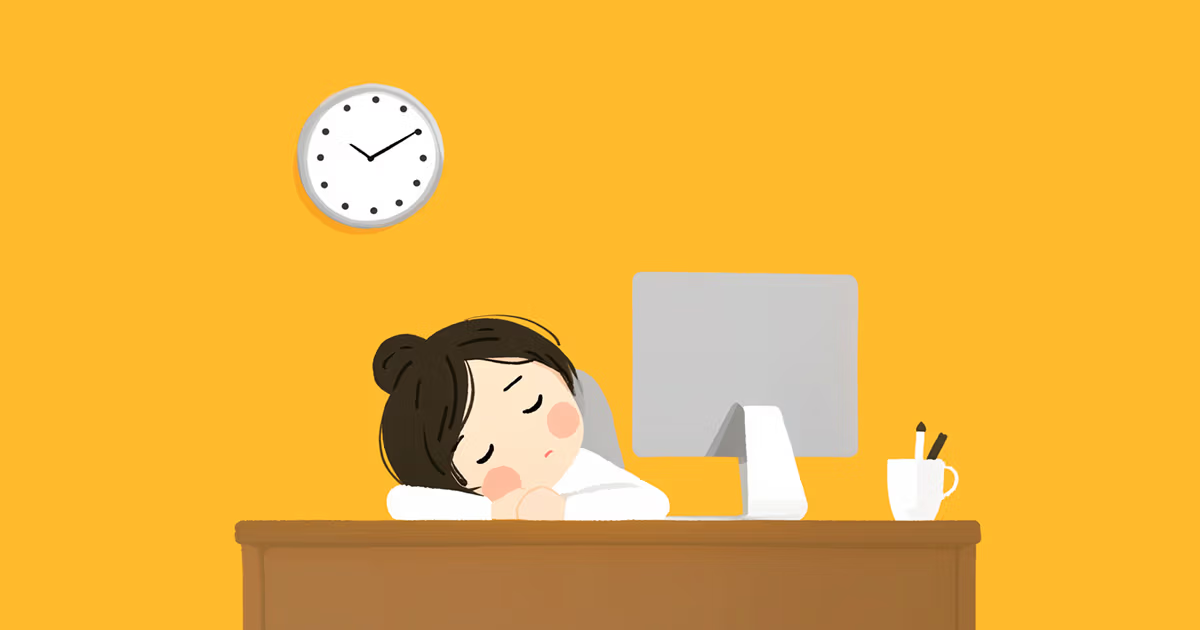
Some days slip away before you feel like you’ve properly started. You look at the task, think about doing it, circle around it, and somehow end up doing three smaller things that were never the priority. That pattern can leave you feeling scattered, guilty, and more behind than when the day began.
Procrastination is often treated like a laziness problem, but it’s usually more complicated than that. Sometimes the task feels too big. Sometimes you’re tired, mentally cluttered, unsure where to begin, or quietly worried you won’t do it well enough. In those moments, putting things off can feel like relief. The trouble is that the relief rarely lasts.
Learning how to procrastinate less isn’t about becoming relentlessly productive. It’s about making daily life feel lighter. When you start earlier, even imperfectly, you reduce mental drag, protect your energy, and give yourself a better chance of ending the day feeling satisfied rather than frustrated.
Why Procrastination Feels So Hard to Break
Many people assume procrastination is simply poor discipline. In reality, it’s often tied to emotion. Research suggests procrastination is closely linked with stress and difficulty managing uncomfortable feelings, which helps explain why people delay tasks even when they know that delaying them will make life harder later.
That matters because it shifts the question. Avoid asking something like, “Why am I so useless at getting started?” A better question is, “What feels uncomfortable about this task?” The answer might be boredom, uncertainty, fear of doing a mediocre job, resentment, or simple overwhelm. Once you can name the friction, the task becomes easier to handle.
This is one reason harsh self-talk tends to backfire. If every delayed task turns into a round of self-criticism, the work starts to carry even more emotional weight. Then avoiding it feels even more tempting.
Make the First Step Smaller
One of the most helpful ways to interrupt procrastination is to reduce the starting cost. People often tell themselves to “just get it done”, but that can make a task sound bigger and heavier than it needs to be. A better approach is to make the first step almost laughably manageable.
That might mean opening the document, writing one rough sentence, replying to the first email only, or working for ten minutes instead of imagining the full two-hour effort. Tiny starts matter because they lower resistance. Momentum is often built after action begins, not before.
This approach also helps when a task feels vague. Vague tasks are easy to avoid because there’s no clear entry point. “Sort out finances” is easy to delay. “Open banking app and list this week’s transactions” is much easier to begin. The more specific the action, the less room procrastination has to hide.
Decide in Advance What You Will Do
It’s much harder to rely on motivation in the moment than many people think. Decision fatigue, distraction, and mood all interfere. That’s why it helps to choose your next action before the moment arrives. Research on implementation intentions shows that specifying when, where, and how you will act can improve the chances that intention turns into behaviour.
In everyday life, this can be very simple. Instead of saying, “I need to work on that report today”, say, “At 10 am, I’ll spend 25 minutes drafting the opening section at the kitchen table”. That kind of plan reduces hesitation because you’re not negotiating with yourself each time the task comes to mind.
This is especially useful for recurring tasks you often avoid. If you tend to put off exercise, admin, meal planning, or difficult messages, build a repeatable cue around them. A clear plan removes some of the emotional drama and turns action into something more automatic.
Lower the Pressure to Do It Perfectly
Perfectionism and procrastination often travel together. When you feel like the result has to be impressive, polished, or mistake-free, starting can feel strangely risky. Delay then becomes a way of protecting yourself from the discomfort of producing something imperfect.
That protection comes at a cost. The longer you wait, the more pressure builds. What could have been a decent first draft becomes a stressful last-minute rush. In many cases, the real goal isn’t excellence on the first try. It’s movement.
It helps to remember that most tasks don’t need your absolute best. They need your honest attention. A rough version can be improved. A delayed task can’t. Giving yourself permission to do a mediocre first pass is often what allows good work to happen later.
Use Self-Compassion to Get Moving Again
Many procrastinators think they need to be tougher on themselves. It sounds logical, but shame rarely creates steady follow-through. Research suggests lower self-compassion may help explain part of the link between procrastination and stress, while self-compassion may also support a healthier response when things have been put off.
Self-compassion doesn’t mean letting yourself off the hook. It means dropping the unnecessary attack. Instead of “I’ve wasted the whole morning, I’m hopeless”, it sounds more like, “I’ve been avoiding this, and I need a gentler way back in”. That shift matters because it makes re-entry easier.
A kind response is often more practical than a punishing one. It helps you reset faster, rather than spending another hour feeling bad about the hour you already lost.
Shape Your Environment to Support Action
Sometimes procrastination is less about psychology and more about setup. If your phone is beside you, your workspace is cluttered, the task is unclear, and you’re trying to do five things at once, starting will feel harder than it needs to.
Supportive environments reduce friction. Put the charger in another room. Close spare tabs. Leave the document open. Keep the materials for your next task visible and ready. Decide what “done for now” looks like before you begin. These are small changes, but they make action more likely.
This is also where energy matters. A difficult task will usually feel heavier when you’re hungry, tired, or mentally drained. Procrastination isn’t always a sign that you need better discipline. Sometimes it’s a sign that you need a better working rhythm.
What to Do When You Have Already Put It Off
One delayed task doesn’t need to become a lost day. If you’ve been procrastinating, the most useful question isn’t “Why did I do this again?” It is “What’s the next useful step from here?”
That next step might be sending the message, setting a timer, outlining the first three points, or spending fifteen focused minutes on the toughest part of the task. Keep it concrete. Keep it small. Most importantly, keep it moving.
Progress has a calming effect. Once you re-enter the task, the story in your head often softens. The thing you were dreading becomes something you’re handling.
Turning Intention into Action
Stopping procrastination isn’t about becoming a different kind of person. It’s about understanding what gets in your way and responding with more skill. When you make tasks smaller, decide your next move in advance, and stop treating every delay like a character flaw, getting started becomes much easier.
Some days will still feel resistant. That’s normal. What matters is building a reliable way back into action. When you can do that, you don’t just get more done. You make your days feel steadier, clearer, and much more manageable.


