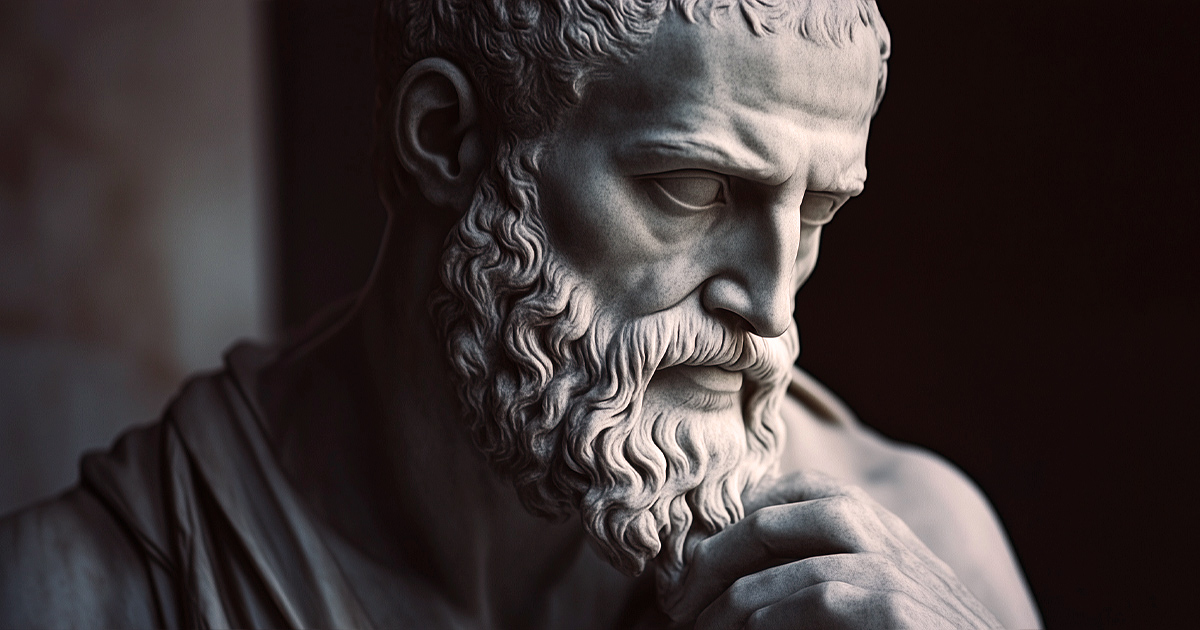
Stoicism is an ancient philosophy with a surprisingly practical place in modern life.
Stoicism teaches that we can’t control everything that happens around us, but we can work on how we respond. We can’t control every delay, disappointment, opinion, setback, or challenging interaction we face. But we can shape our judgement, our choices, our attitude, and the way we carry ourselves through those moments.
That idea can be deeply grounding. In a world that often feels rushed, reactive, and uncertain, Stoicism offers a calmer way to live. It encourages us to focus less on what’s outside our control and more on the kind of person we are becoming.
Stoicism isn’t about suppressing emotion or pretending life doesn’t hurt. It’s about learning how to meet life with more wisdom, courage, fairness, and self-control. When practised gently and consistently, it can help us feel less ruled by circumstances and more guided by our values.
Understanding Stoicism
Stoicism began in ancient Greece with Zeno of Citium and was later developed by thinkers such as Seneca, Epictetus, and Marcus Aurelius. Although it’s centuries old, its ideas still speak to many of the struggles people face today: stress, uncertainty, disappointment, anger, ambition, loss, and the search for a meaningful life.
The Stanford Encyclopedia of Philosophy explains Stoicism as one of the major philosophical traditions of the Hellenistic period, with ethics and how to live well at its centre.
For the Stoics, happiness wasn’t simply about pleasure, comfort, or getting everything we want. It was connected to character. A good life was built through virtue: wisdom, courage, justice, and temperance. In simpler terms, Stoicism asks us to become more thoughtful, brave, fair, and disciplined in the way we live.
This doesn’t mean money, success, health, or comfort are meaningless. It means they are not enough on their own. A person can have many external advantages and still feel restless, resentful, or lost. Stoicism reminds us that the quality of our inner life matters too.
Focusing on What You Can Control
One of the most useful Stoic ideas is often called the dichotomy of control. It means learning to separate what’s within your influence from what’s not.
You can’t fully control what other people think of you. You can’t control the past. You can’t control every outcome, delay, mistake, or unexpected change. But you can often control your effort, your honesty, your preparation, your boundaries, your attitude, and your next choice.
This distinction sounds simple, but it can change the way we move through life.
When we put too much energy into things beyond our control, we often feel anxious, angry, or powerless. We replay conversations. We imagine worst-case scenarios. We try to force certainty where none exists. Stoicism gently brings us back to a better question: what’s mine to do here?
That question doesn’t remove pain or difficulty. But it gives us somewhere useful to place our attention.
Resilience Through Adversity
Stoicism doesn’t promise a life without hardship. In fact, it begins with the honest recognition that difficulty is part of being human.
Plans fall apart. People disappoint us. We make mistakes. Life changes without asking for permission. Stoicism teaches that while we may not choose every challenge, we can practise choosing our response.
This is one reason Stoicism can be useful for building resilience. Instead of seeing every obstacle as proof that life is against us, we can learn to see difficulty as a place where character is tested and strengthened.
That doesn’t mean pretending every painful experience is good. Some things are genuinely hard, unfair, or heartbreaking. Stoicism simply invites us to ask what kind of person we want to be in the middle of them.
Can we stay honest? Can we act with patience? Can we avoid making the situation worse through impulsive reactions? Can we keep our values close when life feels uncomfortable?
These are not easy questions, but they are useful ones.
Stoicism in Modern Life
Modern Stoicism has become popular because it’s practical. It doesn’t require a perfect morning routine, a quiet retreat, or years of academic study. Many of its ideas can be applied in ordinary moments: waiting in traffic, receiving criticism, handling conflict, managing pressure, or facing a setback.
For some people, Stoicism supports emotional regulation. For others, it offers a clearer way to think about responsibility, discipline, gratitude, or purpose. It can also sit comfortably alongside other wellbeing practices, such as journalling, mindfulness, reflection, exercise, and gratitude.
There are similarities between Stoic reflection and modern mindfulness. Both encourage us to notice our thoughts instead of being completely controlled by them. Healthdirect Australia describes mindfulness as a way to focus on the present moment, feel calmer, and manage stressful situations. The Mental Health Foundation UK also notes that mindfulness can help people become more aware of their thoughts, feelings, and surroundings.
Stoicism isn’t a replacement for mental health care, therapy, or practical support when those are needed. But as a daily philosophy, it can help us pause, reflect, and respond with more care.
5 Stoicism Practices for a Happier Life
Stoicism becomes most useful when it moves from an idea into a daily practice. You don’t need to do all of these perfectly. Even one or two small habits can help you build more clarity and emotional strength.
1. Reflect on Your Day
Daily reflection is one of the simplest ways to practise Stoicism.
Marcus Aurelius, the Roman emperor and Stoic philosopher, wrote personal reflections that later became known as Meditations. His writing wasn’t polished self-help advice for an audience. It was a private practice of reminding himself how to live, think, lead, and respond.
You can use a similar approach in your own life. A few minutes of reflection in the morning or evening can help you notice what’s shaping your thoughts and behaviour.
In the morning, you might ask:
- What matters most today?
- What’s within my control?
- What kind of person do I want to be, even if the day is difficult?
In the evening, you might ask:
- Where did I respond well today?
- Where did I react in a way I regret?
- What can I learn without being harsh on myself?
This kind of reflection isn’t about self-criticism. It’s about self-awareness. The aim is to understand yourself more clearly, so you can keep growing with honesty and patience.
2. Practise Negative Visualisation
Negative visualisation, sometimes called premeditatio malorum, is the practice of calmly imagining possible setbacks before they happen.
At first, this may sound pessimistic. But the purpose isn’t to dwell on fear. It’s to prepare the mind so challenges feel less shocking when they arrive.
For example, you might imagine that a plan doesn’t go smoothly, someone misunderstands you, traffic delays you, or a project takes longer than expected. Then you calmly consider how you would like to respond.
You might ask yourself:
- What could realistically go wrong?
- How could I handle that with patience and good judgement?
- What would still be within my control?
- How can I prepare without becoming anxious?
This practice can help everyday problems feel less overwhelming when they arise. Instead of being surprised that life is imperfect, you begin to meet imperfection with more flexibility.
The key is to keep it balanced. Negative visualisation should help you feel more prepared, not more fearful. If it starts to increase anxiety, it may be better to use a gentler reflection practice instead.
3. Pause Before Reacting
Stoicism places a lot of importance on the space between what happens and how we respond.
Someone may snap at you. A plan may change. A message may irritate you. A mistake may embarrass you. In those first moments, it’s easy to react quickly and then regret it later.
A small pause gives you a little more room to choose your response.
That pause might be as simple as taking one slow breath before replying. It might mean stepping away from a conversation for a few minutes. It might mean waiting before sending a message written in frustration.
During that pause, you can ask:
- What am I feeling right now?
- What story am I telling myself about this?
- What response would I respect later?
- What would be wise, not just satisfying in the moment?
This practice doesn’t make you passive. It helps you respond with more intention. Sometimes the right response is still firm. Sometimes it involves setting a boundary, speaking honestly, or taking action. The difference is that your response comes from clarity rather than impulse.
4. Build Gratitude and Acceptance
Stoicism encourages us to appreciate what we have while understanding that nothing in life is fully guaranteed.
This doesn’t mean ignoring problems or pretending everything is fine. Gratitude isn’t a way of dismissing pain. It’s a way of widening our attention so we don’t only notice what’s missing, frustrating, or uncertain.
You might practise gratitude by writing down three things you appreciate each day. They don’t need to be dramatic. A warm meal, a kind message, a quiet walk, a useful conversation, or a moment of rest can all count.
Research and wellbeing discussions often connect gratitude with better emotional health. For example, Harvard Health discusses gratitude as a practice linked with greater emotional and social wellbeing.
Stoic acceptance works alongside gratitude. It asks us to stop fighting reality in our minds once something has already happened. Acceptance doesn’t mean approval. It means recognising the truth of the moment so we can respond more wisely.
Instead of asking, “Why did this happen to me?” we might ask, “Given that this has happened, what’s the best thing I can do now?”
That shift can bring a little more peace into difficult moments.
5. Choose Voluntary Discomfort
Some Stoics practised voluntary discomfort as a way to build discipline, perspective, and resilience. The idea was simple: if we occasionally choose small discomforts, we become less frightened of discomfort in general.
In modern life, this doesn’t need to be extreme. It might mean exercising when you would rather avoid it, taking a cold shower, walking instead of driving a short distance, limiting unnecessary spending, or sitting with boredom instead of reaching for your phone.
The point isn’t to punish yourself. It’s to remind yourself that discomfort is survivable.
This practice can also help us become more aware of how often comfort quietly shapes our choices. We may avoid hard conversations, delay important work, or choose easy distractions because discomfort feels unpleasant. Stoicism invites us to build the inner strength to do what matters, even when it’s not easy.
A useful question is:
What small discomfort could I choose today that would support the person I want to become?
The answer should be realistic and healthy. Stoicism isn’t about forcing yourself beyond your limits. It’s about learning that you are often more capable than your first feelings suggest.
Bringing Stoicism into Everyday Life
Stoicism can sometimes be misunderstood as emotional toughness, but its deeper value isn’t about becoming cold or detached. It’s about becoming more grounded.
A Stoic life isn’t a life without feeling. It’s a life where feelings are acknowledged without being allowed to control every choice. It’s a life where values matter more than appearances, where character matters more than approval, and where self-respect is built through daily actions.
You don’t need to master Stoicism to benefit from it. You can begin with one small practice: pausing before you react, reflecting at the end of the day, focusing on what you can control, or noticing one thing you are grateful for.
The real strength of Stoicism is that it brings us back to what’s ours to shape. We may not control every circumstance, but we can keep returning to wisdom, courage, fairness, and self-control.
That’s a calmer way to live. It’s also a more meaningful one.
First published: 22 March 2025
Last updated: 5 June 2026


